Blog Posts
Insights & Stories to Support Your Habit Journey
Filter
Blog Posts
Insights & Stories to Support Your Habit Journey
Search
Search
Filter
Editor's Picks

Elena
Unlock Peak Performance: The 7 Daily Habits Inspired by Andrew Huberman to Optimize Your Brain and Body
In our relentless pursuit of success, we often look for complex biohacks, expensive supplements, or radical lifestyle overhauls. But what if peak cognitive sharpness and sustained physical energy came down to mastering the fundamentals?
Drawing inspiration from neuroscience and the expert insights shared on The Diary Of A CEO by Andrew Huberman, optimizing your daily routine doesn't require a science degree - it requires consistency [https://www.youtube.com/watch?v=MGxcosNuC8k].
Whether you are building your personal growth roadmap or tracking your daily routines using structured tools like the Hbits app, here are seven science-backed habits to transform your mental and physical well-being.
The Habit: Drink 16 to 32 ounces (1–2 glasses) of water immediately after waking up.
The Science: Sleep is a state of natural dehydration. Jumping straight into your morning routine without water leaves your brain operating in a fog. Healthline notes that drinking water first thing in the morning jumpstarts your hydration, sets a positive tone for the day, and directly supports mental sharpness.
The Habit: Step outside for at least 10 minutes of natural daylight every single morning.
The Science: Your body’s internal clock (circadian rhythm) relies heavily on photon receptors in your eyes. Morning sunlight helps regulate your cortisol spikes healthily, boosting your mood, energy levels, and long-term sleep quality.
The Habit: Engage in cardio or resistance training within the first three hours of waking.
The Science: Early movement acts as a physiological catalyst. Research highlighted by the American College of Cardiology indicates that individuals who regularly exercise early in the morning significantly reduce risks associated with high blood pressure, type 2 diabetes, and cardiovascular strain, all while priming the brain for high-energy focus.
The Habit: Integrate physiological sighs - two quick inhales through the nose followed by a long, extended exhale through the mouth - several times throughout your day.
The Science: Popularized by Stanford research and discussed in Huberman's protocols, this breathing technique is a fast-acting neurological reflex that offloads carbon dioxide and immediately brings down autonomic arousal, helping you clear mental clutter and lower stress.
The Habit: Eliminate all light pollution in your bedroom using blackout curtains or an eye mask.
The Science: Even minimal ambient light during sleep can disrupt melatonin production and negatively impact deep rest. Studies reported by Time link light exposure during sleep to an increased risk of mood imbalances and disrupted circadian health.
The Habit: Block out 90 minutes to 2 hours every workday for intense, distraction-free focus.
The Science: The human brain thrives on neuroplasticity, which is unlocked through friction and deep concentration. When you learn to value effort for its instrumentality rather than immediate comfort, you train your brain to experience genuine satisfaction from tackling complex, high-friction tasks.
The Habit: Set aside at least 10 minutes each day for quiet, unplugged self-reflection.
The Science: Reflection is a crucial metacognitive process that enhances critical thinking and self-awareness. Taking a few moments to evaluate your day bridges the gap between raw action and meaningful personal growth.
Knowing what to do is only half the battle; the real magic happens when these practices compound into a daily habit-building system.
By tracking small, intentional wins every day - from your morning glass of water to your evening deep-work review - you build the ultimate framework for long-term cognitive and physical vitality.
Q: How does morning sunlight exposure improve sleep quality?
A: Exposing your eyes to natural daylight within the first hour of waking triggers photon receptors that signal your brain's master clock (the suprachiasmatic nucleus). This healthy morning cortisol spike helps regulate your circadian rhythm, making it easier for your body to produce melatonin naturally when night falls.
Q: What is a physiological sigh and how do I perform it?
A: A physiological sigh is a rapid, natural breathing pattern that instantly reduces autonomic arousal and stress. To perform one, take two quick inhales in succession through your nose (one deep breath followed immediately by a sharp top-off inhale), then release a long, slow exhale through your mouth. Doing this 2 to 3 times can quickly clear mental clutter.
Q: Why is drinking water immediately after waking so important?
A: During sleep, your body goes hours without fluid intake, leading to mild dehydration upon waking. Drinking 16 to 32 ounces of water right away jumpstarts your metabolism, rehydrates brain tissue, and instantly clears morning brain fog to set a high-energy tone for the day.
Q: How does tracking habits in an app like Hbits improve consistency?
A: Tracking tools leverage behavioral psychology by providing visual progress bars and daily streaks. Seeing your daily wins - such as morning workouts, deep work blocks, and hydration - creates a psychological feedback loop that reinforces habit formation and holds you accountable.
Health & Fitness
Productivity
Mindfulness

Elena
Transformation Thursdays: “Lymph Reboot” (Huberman Lab edition)
If you ever felt puffy, foggy, and blah, this was a signal that your lymphatic system needed some attention.
Quick primer: your lymphatic system has no central pump. It relies on movement, breathing, pressure, and sleep to move fluid, clear waste, and support immunity. Huberman’s latest episode lays out deeper understanding of the lymphatic system, its role in health and appearance, and practical tools; here’s some actionable snippets for you to apply starting from today.
Light bouncing = rhythmic muscle/pressure changes that help move lymph. It’s also just fun. Evidence for “detox” claims is thin, but rebounding improves fitness markers.
Water’s hydrostatic pressure acts like a full-body gentle compression sleeve; studies note it can encourage central fluid flow and help limb swelling.
Your thoracic diaphragm is a pump for the thoracic duct - slow belly breaths change pressure and support lymph return. Tip: stack this with tea breaks or phone checks.
Very light, directional strokes toward the nodes. Evidence is strongest for clinical lymphedema; for cosmetic de-puffing it’s reasonable and low-risk if you’re healthy. Avoid if you have infection, active cancer treatment without clearance, or heart failure - ask your clinician.
Side-sleeping can support glymphatic clearance (the brain’s waste-removal pathway active during sleep); animal and imaging studies suggest lateral position helps.
Set a timer and sip 8–16 oz water every 1–2 hours during the day (adjusting for thirst/activity; electrolytes if training). Huberman flags hydration as a direct support for lymph function; steady intake beats “catch-up” chugging.
Moderate cardio (20–45 min) supports lymph-vessel health and cardiac aging pathways; new work even shows exercise-induced lymphatic remodeling in the heart.
Get 10–30 min morning sunlight for circadian + general health, and experiment with brief red/near-infrared (650–1000 nm) light in the evening (eyes protected). PBM has clinical use cases for lymphedema; home use is a “nice-to-have,” not essential.
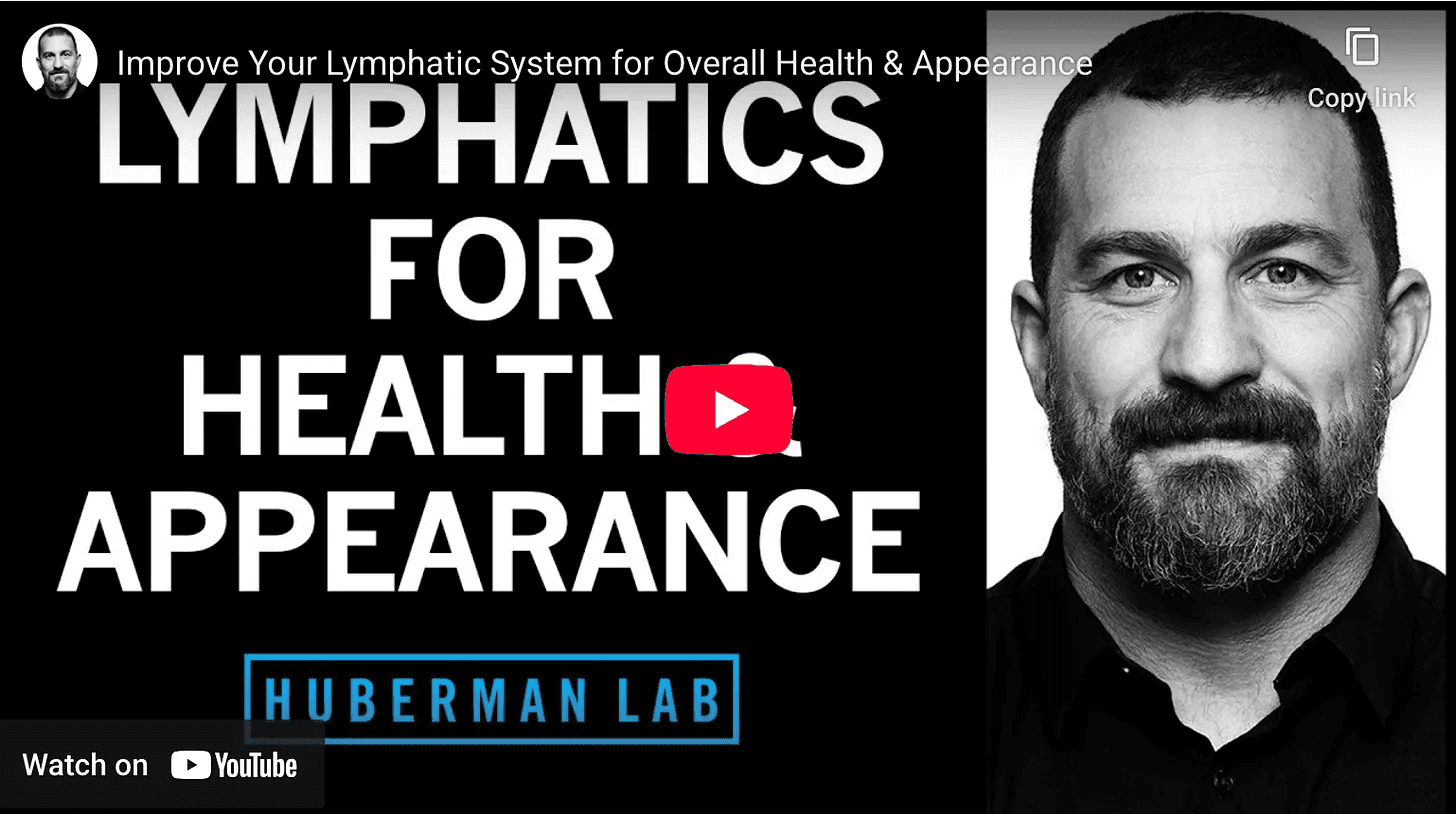
Huberman Lab: Improve Your Lymphatic System for Overall Health & Appearance. Huberman Lab
Breathing & lymph: Diaphragmatic breathing influences thoracic-duct lymph drainage; respiratory cycle changes lymph–venous pressure gradient. PMC
Water exercise & edema: Hydrostatic pressure supports central fluid flow; helpful in limb swelling contexts. PMC & ScienceDirect
Rebounding: Fitness benefits shown; claims of “detox” are overstated—use it as enjoyable movement. PubMed & PMC
Side-sleeping & glymphatic: Lateral position shows more efficient waste transport in animal/human-imaging research. Journal of Neuroscience
Photobiomodulation: Red/NIR (≈650–1000 nm) studied for lymphedema management; evidence base growing. Substack
Health & Fitness

Elena
Transformation Thursdays: How to achieve Big Goals
I’ve always been on the lookout for goal-reaching strategies. Not because I haven’t achieved what I aimed for - I have, for some goals. But for others, I’m constantly failing.
In this post I’ll describe a few steps I picked up from the Huberman Lab podcast episode with Alex Honnold, who is famous for his ropeless ascent of Yosemite’s El Capitan in the Oscar-winning film Free Solo.
Set a specific goal within given limits
The first step Alex mentioned when he was asked about achieving Big Goals is: “Always set a specific goal within given limits such as time and resources.” Translating it to Alex’s experience: “If you have only 3 hours for climbing, don’t aim to reach the top that realistically takes 6 hours.”
Do something different
Alex also suggests that you challenge yourself by doing something differently - a little bit harder or a little bit new. In a rock-climbing context, choose a new way to climb the same rock, or choose different weather conditions (within safety boundaries).
Take a small step toward your Big Goal every day
As Alex puts it: “The big thing will come naturally when you take a small step toward it every single day.” Have your Big Goal in mind, but focus on daily actions that will eventually bring you to the finish line. Translating it into Alex’s world - yes, he wanted to become great at rock climbing and earn a living with it, but on a daily basis he practiced climbing simply because he loved it.
Think of your mortality
Knowing that you are here on this planet for only a limited period of time makes Alex question what he wants to do now so he can be proud at the end of his life. Don’t be afraid to think of your final day on planet Earth; see it as a booster for the effort you put into your daily actions and as a reminder not to waste your time.
Go all in
Choose the Big Goal and don’t look back - don’t doubt - put all your energy into it.
Thank you for reading! I hope this short post gave you the boost to take a step toward your Big Goal that will eventually help you cross the finish line.
Productivity

Elena
Unlock Peak Performance: The 7 Daily Habits Inspired by Andrew Huberman to Optimize Your Brain and Body
In our relentless pursuit of success, we often look for complex biohacks, expensive supplements, or radical lifestyle overhauls. But what if peak cognitive sharpness and sustained physical energy came down to mastering the fundamentals?
Drawing inspiration from neuroscience and the expert insights shared on The Diary Of A CEO by Andrew Huberman, optimizing your daily routine doesn't require a science degree - it requires consistency [https://www.youtube.com/watch?v=MGxcosNuC8k].
Whether you are building your personal growth roadmap or tracking your daily routines using structured tools like the Hbits app, here are seven science-backed habits to transform your mental and physical well-being.
The Habit: Drink 16 to 32 ounces (1–2 glasses) of water immediately after waking up.
The Science: Sleep is a state of natural dehydration. Jumping straight into your morning routine without water leaves your brain operating in a fog. Healthline notes that drinking water first thing in the morning jumpstarts your hydration, sets a positive tone for the day, and directly supports mental sharpness.
The Habit: Step outside for at least 10 minutes of natural daylight every single morning.
The Science: Your body’s internal clock (circadian rhythm) relies heavily on photon receptors in your eyes. Morning sunlight helps regulate your cortisol spikes healthily, boosting your mood, energy levels, and long-term sleep quality.
The Habit: Engage in cardio or resistance training within the first three hours of waking.
The Science: Early movement acts as a physiological catalyst. Research highlighted by the American College of Cardiology indicates that individuals who regularly exercise early in the morning significantly reduce risks associated with high blood pressure, type 2 diabetes, and cardiovascular strain, all while priming the brain for high-energy focus.
The Habit: Integrate physiological sighs - two quick inhales through the nose followed by a long, extended exhale through the mouth - several times throughout your day.
The Science: Popularized by Stanford research and discussed in Huberman's protocols, this breathing technique is a fast-acting neurological reflex that offloads carbon dioxide and immediately brings down autonomic arousal, helping you clear mental clutter and lower stress.
The Habit: Eliminate all light pollution in your bedroom using blackout curtains or an eye mask.
The Science: Even minimal ambient light during sleep can disrupt melatonin production and negatively impact deep rest. Studies reported by Time link light exposure during sleep to an increased risk of mood imbalances and disrupted circadian health.
The Habit: Block out 90 minutes to 2 hours every workday for intense, distraction-free focus.
The Science: The human brain thrives on neuroplasticity, which is unlocked through friction and deep concentration. When you learn to value effort for its instrumentality rather than immediate comfort, you train your brain to experience genuine satisfaction from tackling complex, high-friction tasks.
The Habit: Set aside at least 10 minutes each day for quiet, unplugged self-reflection.
The Science: Reflection is a crucial metacognitive process that enhances critical thinking and self-awareness. Taking a few moments to evaluate your day bridges the gap between raw action and meaningful personal growth.
Knowing what to do is only half the battle; the real magic happens when these practices compound into a daily habit-building system.
By tracking small, intentional wins every day - from your morning glass of water to your evening deep-work review - you build the ultimate framework for long-term cognitive and physical vitality.
Q: How does morning sunlight exposure improve sleep quality?
A: Exposing your eyes to natural daylight within the first hour of waking triggers photon receptors that signal your brain's master clock (the suprachiasmatic nucleus). This healthy morning cortisol spike helps regulate your circadian rhythm, making it easier for your body to produce melatonin naturally when night falls.
Q: What is a physiological sigh and how do I perform it?
A: A physiological sigh is a rapid, natural breathing pattern that instantly reduces autonomic arousal and stress. To perform one, take two quick inhales in succession through your nose (one deep breath followed immediately by a sharp top-off inhale), then release a long, slow exhale through your mouth. Doing this 2 to 3 times can quickly clear mental clutter.
Q: Why is drinking water immediately after waking so important?
A: During sleep, your body goes hours without fluid intake, leading to mild dehydration upon waking. Drinking 16 to 32 ounces of water right away jumpstarts your metabolism, rehydrates brain tissue, and instantly clears morning brain fog to set a high-energy tone for the day.
Q: How does tracking habits in an app like Hbits improve consistency?
A: Tracking tools leverage behavioral psychology by providing visual progress bars and daily streaks. Seeing your daily wins - such as morning workouts, deep work blocks, and hydration - creates a psychological feedback loop that reinforces habit formation and holds you accountable.
Health & Fitness
Productivity
Mindfulness
Elena
Transformation Thursdays: “Lymph Reboot” (Huberman Lab edition)
If you ever felt puffy, foggy, and blah, this was a signal that your lymphatic system needed some attention.
Quick primer: your lymphatic system has no central pump. It relies on movement, breathing, pressure, and sleep to move fluid, clear waste, and support immunity. Huberman’s latest episode lays out deeper understanding of the lymphatic system, its role in health and appearance, and practical tools; here’s some actionable snippets for you to apply starting from today.
Light bouncing = rhythmic muscle/pressure changes that help move lymph. It’s also just fun. Evidence for “detox” claims is thin, but rebounding improves fitness markers.
Water’s hydrostatic pressure acts like a full-body gentle compression sleeve; studies note it can encourage central fluid flow and help limb swelling.
Your thoracic diaphragm is a pump for the thoracic duct - slow belly breaths change pressure and support lymph return. Tip: stack this with tea breaks or phone checks.
Very light, directional strokes toward the nodes. Evidence is strongest for clinical lymphedema; for cosmetic de-puffing it’s reasonable and low-risk if you’re healthy. Avoid if you have infection, active cancer treatment without clearance, or heart failure - ask your clinician.
Side-sleeping can support glymphatic clearance (the brain’s waste-removal pathway active during sleep); animal and imaging studies suggest lateral position helps.
Set a timer and sip 8–16 oz water every 1–2 hours during the day (adjusting for thirst/activity; electrolytes if training). Huberman flags hydration as a direct support for lymph function; steady intake beats “catch-up” chugging.
Moderate cardio (20–45 min) supports lymph-vessel health and cardiac aging pathways; new work even shows exercise-induced lymphatic remodeling in the heart.
Get 10–30 min morning sunlight for circadian + general health, and experiment with brief red/near-infrared (650–1000 nm) light in the evening (eyes protected). PBM has clinical use cases for lymphedema; home use is a “nice-to-have,” not essential.
Huberman Lab: Improve Your Lymphatic System for Overall Health & Appearance. Huberman Lab
Breathing & lymph: Diaphragmatic breathing influences thoracic-duct lymph drainage; respiratory cycle changes lymph–venous pressure gradient. PMC
Water exercise & edema: Hydrostatic pressure supports central fluid flow; helpful in limb swelling contexts. PMC & ScienceDirect
Rebounding: Fitness benefits shown; claims of “detox” are overstated—use it as enjoyable movement. PubMed & PMC
Side-sleeping & glymphatic: Lateral position shows more efficient waste transport in animal/human-imaging research. Journal of Neuroscience
Photobiomodulation: Red/NIR (≈650–1000 nm) studied for lymphedema management; evidence base growing. Substack
Health & Fitness
Elena
Transformation Thursdays: How to achieve Big Goals
I’ve always been on the lookout for goal-reaching strategies. Not because I haven’t achieved what I aimed for - I have, for some goals. But for others, I’m constantly failing.
In this post I’ll describe a few steps I picked up from the Huberman Lab podcast episode with Alex Honnold, who is famous for his ropeless ascent of Yosemite’s El Capitan in the Oscar-winning film Free Solo.
Set a specific goal within given limits
The first step Alex mentioned when he was asked about achieving Big Goals is: “Always set a specific goal within given limits such as time and resources.” Translating it to Alex’s experience: “If you have only 3 hours for climbing, don’t aim to reach the top that realistically takes 6 hours.”
Do something different
Alex also suggests that you challenge yourself by doing something differently - a little bit harder or a little bit new. In a rock-climbing context, choose a new way to climb the same rock, or choose different weather conditions (within safety boundaries).
Take a small step toward your Big Goal every day
As Alex puts it: “The big thing will come naturally when you take a small step toward it every single day.” Have your Big Goal in mind, but focus on daily actions that will eventually bring you to the finish line. Translating it into Alex’s world - yes, he wanted to become great at rock climbing and earn a living with it, but on a daily basis he practiced climbing simply because he loved it.
Think of your mortality
Knowing that you are here on this planet for only a limited period of time makes Alex question what he wants to do now so he can be proud at the end of his life. Don’t be afraid to think of your final day on planet Earth; see it as a booster for the effort you put into your daily actions and as a reminder not to waste your time.
Go all in
Choose the Big Goal and don’t look back - don’t doubt - put all your energy into it.
Thank you for reading! I hope this short post gave you the boost to take a step toward your Big Goal that will eventually help you cross the finish line.
Productivity
Editor's Picks
All Articles
Unlock Peak Performance: The 7 Daily Habits Inspired by Andrew Huberman to Optimize Your Brain and Body
Unlock Peak Performance: The 7 Daily Habits Inspired by Andrew Huberman to Optimize Your Brain and Body
In our relentless pursuit of success, we often look for complex biohacks, expensive supplements, or radical lifestyle overhauls. But what if peak cognitive sharpness and sustained physical energy came down to mastering the fundamentals?
Drawing inspiration from neuroscience and the expert insights shared on The Diary Of A CEO by Andrew Huberman, optimizing your daily routine doesn't require a science degree - it requires consistency [https://www.youtube.com/watch?v=MGxcosNuC8k].
Whether you are building your personal growth roadmap or tracking your daily routines using structured tools like the Hbits app, here are seven science-backed habits to transform your mental and physical well-being.
The Habit: Drink 16 to 32 ounces (1–2 glasses) of water immediately after waking up.
The Science: Sleep is a state of natural dehydration. Jumping straight into your morning routine without water leaves your brain operating in a fog. Healthline notes that drinking water first thing in the morning jumpstarts your hydration, sets a positive tone for the day, and directly supports mental sharpness.
The Habit: Step outside for at least 10 minutes of natural daylight every single morning.
The Science: Your body’s internal clock (circadian rhythm) relies heavily on photon receptors in your eyes. Morning sunlight helps regulate your cortisol spikes healthily, boosting your mood, energy levels, and long-term sleep quality.
The Habit: Engage in cardio or resistance training within the first three hours of waking.
The Science: Early movement acts as a physiological catalyst. Research highlighted by the American College of Cardiology indicates that individuals who regularly exercise early in the morning significantly reduce risks associated with high blood pressure, type 2 diabetes, and cardiovascular strain, all while priming the brain for high-energy focus.
The Habit: Integrate physiological sighs - two quick inhales through the nose followed by a long, extended exhale through the mouth - several times throughout your day.
The Science: Popularized by Stanford research and discussed in Huberman's protocols, this breathing technique is a fast-acting neurological reflex that offloads carbon dioxide and immediately brings down autonomic arousal, helping you clear mental clutter and lower stress.
The Habit: Eliminate all light pollution in your bedroom using blackout curtains or an eye mask.
The Science: Even minimal ambient light during sleep can disrupt melatonin production and negatively impact deep rest. Studies reported by Time link light exposure during sleep to an increased risk of mood imbalances and disrupted circadian health.
The Habit: Block out 90 minutes to 2 hours every workday for intense, distraction-free focus.
The Science: The human brain thrives on neuroplasticity, which is unlocked through friction and deep concentration. When you learn to value effort for its instrumentality rather than immediate comfort, you train your brain to experience genuine satisfaction from tackling complex, high-friction tasks.
The Habit: Set aside at least 10 minutes each day for quiet, unplugged self-reflection.
The Science: Reflection is a crucial metacognitive process that enhances critical thinking and self-awareness. Taking a few moments to evaluate your day bridges the gap between raw action and meaningful personal growth.
Knowing what to do is only half the battle; the real magic happens when these practices compound into a daily habit-building system.
By tracking small, intentional wins every day - from your morning glass of water to your evening deep-work review - you build the ultimate framework for long-term cognitive and physical vitality.
Q: How does morning sunlight exposure improve sleep quality?
A: Exposing your eyes to natural daylight within the first hour of waking triggers photon receptors that signal your brain's master clock (the suprachiasmatic nucleus). This healthy morning cortisol spike helps regulate your circadian rhythm, making it easier for your body to produce melatonin naturally when night falls.
Q: What is a physiological sigh and how do I perform it?
A: A physiological sigh is a rapid, natural breathing pattern that instantly reduces autonomic arousal and stress. To perform one, take two quick inhales in succession through your nose (one deep breath followed immediately by a sharp top-off inhale), then release a long, slow exhale through your mouth. Doing this 2 to 3 times can quickly clear mental clutter.
Q: Why is drinking water immediately after waking so important?
A: During sleep, your body goes hours without fluid intake, leading to mild dehydration upon waking. Drinking 16 to 32 ounces of water right away jumpstarts your metabolism, rehydrates brain tissue, and instantly clears morning brain fog to set a high-energy tone for the day.
Q: How does tracking habits in an app like Hbits improve consistency?
A: Tracking tools leverage behavioral psychology by providing visual progress bars and daily streaks. Seeing your daily wins - such as morning workouts, deep work blocks, and hydration - creates a psychological feedback loop that reinforces habit formation and holds you accountable.
Health & Fitness
Productivity
Mindfulness
Mindfulness
Mindfulness
test
test
Elena
Nov 06, 2025
Transformation Thursdays: “Lymph Reboot” (Huberman Lab edition)
Transformation Thursdays: “Lymph Reboot” (Huberman Lab edition)
If you ever felt puffy, foggy, and blah, this was a signal that your lymphatic system needed some attention.
Quick primer: your lymphatic system has no central pump. It relies on movement, breathing, pressure, and sleep to move fluid, clear waste, and support immunity. Huberman’s latest episode lays out deeper understanding of the lymphatic system, its role in health and appearance, and practical tools; here’s some actionable snippets for you to apply starting from today.
Light bouncing = rhythmic muscle/pressure changes that help move lymph. It’s also just fun. Evidence for “detox” claims is thin, but rebounding improves fitness markers.
Water’s hydrostatic pressure acts like a full-body gentle compression sleeve; studies note it can encourage central fluid flow and help limb swelling.
Your thoracic diaphragm is a pump for the thoracic duct - slow belly breaths change pressure and support lymph return. Tip: stack this with tea breaks or phone checks.
Very light, directional strokes toward the nodes. Evidence is strongest for clinical lymphedema; for cosmetic de-puffing it’s reasonable and low-risk if you’re healthy. Avoid if you have infection, active cancer treatment without clearance, or heart failure - ask your clinician.
Side-sleeping can support glymphatic clearance (the brain’s waste-removal pathway active during sleep); animal and imaging studies suggest lateral position helps.
Set a timer and sip 8–16 oz water every 1–2 hours during the day (adjusting for thirst/activity; electrolytes if training). Huberman flags hydration as a direct support for lymph function; steady intake beats “catch-up” chugging.
Moderate cardio (20–45 min) supports lymph-vessel health and cardiac aging pathways; new work even shows exercise-induced lymphatic remodeling in the heart.
Get 10–30 min morning sunlight for circadian + general health, and experiment with brief red/near-infrared (650–1000 nm) light in the evening (eyes protected). PBM has clinical use cases for lymphedema; home use is a “nice-to-have,” not essential.
Huberman Lab: Improve Your Lymphatic System for Overall Health & Appearance. Huberman Lab
Breathing & lymph: Diaphragmatic breathing influences thoracic-duct lymph drainage; respiratory cycle changes lymph–venous pressure gradient. PMC
Water exercise & edema: Hydrostatic pressure supports central fluid flow; helpful in limb swelling contexts. PMC & ScienceDirect
Rebounding: Fitness benefits shown; claims of “detox” are overstated—use it as enjoyable movement. PubMed & PMC
Side-sleeping & glymphatic: Lateral position shows more efficient waste transport in animal/human-imaging research. Journal of Neuroscience
Photobiomodulation: Red/NIR (≈650–1000 nm) studied for lymphedema management; evidence base growing. Substack
Health & Fitness
Mindfulness
Mindfulness
test
test
Elena
Nov 06, 2025
Transformation Thursdays: How to achieve Big Goals
Transformation Thursdays: How to achieve Big Goals
I’ve always been on the lookout for goal-reaching strategies. Not because I haven’t achieved what I aimed for - I have, for some goals. But for others, I’m constantly failing.
In this post I’ll describe a few steps I picked up from the Huberman Lab podcast episode with Alex Honnold, who is famous for his ropeless ascent of Yosemite’s El Capitan in the Oscar-winning film Free Solo.
Set a specific goal within given limits
The first step Alex mentioned when he was asked about achieving Big Goals is: “Always set a specific goal within given limits such as time and resources.” Translating it to Alex’s experience: “If you have only 3 hours for climbing, don’t aim to reach the top that realistically takes 6 hours.”
Do something different
Alex also suggests that you challenge yourself by doing something differently - a little bit harder or a little bit new. In a rock-climbing context, choose a new way to climb the same rock, or choose different weather conditions (within safety boundaries).
Take a small step toward your Big Goal every day
As Alex puts it: “The big thing will come naturally when you take a small step toward it every single day.” Have your Big Goal in mind, but focus on daily actions that will eventually bring you to the finish line. Translating it into Alex’s world - yes, he wanted to become great at rock climbing and earn a living with it, but on a daily basis he practiced climbing simply because he loved it.
Think of your mortality
Knowing that you are here on this planet for only a limited period of time makes Alex question what he wants to do now so he can be proud at the end of his life. Don’t be afraid to think of your final day on planet Earth; see it as a booster for the effort you put into your daily actions and as a reminder not to waste your time.
Go all in
Choose the Big Goal and don’t look back - don’t doubt - put all your energy into it.
Thank you for reading! I hope this short post gave you the boost to take a step toward your Big Goal that will eventually help you cross the finish line.
Productivity
Mindfulness
Mindfulness
test
test
Elena
Nov 06, 2025
Transformation Thursdays: How to achieve Big Goals Copy
Transformation Thursdays: How to achieve Big Goals Copy
I’ve always been on the lookout for goal-reaching strategies. Not because I haven’t achieved what I aimed for - I have, for some goals. But for others, I’m constantly failing.
In this post I’ll describe a few steps I picked up from the Huberman Lab podcast episode with Alex Honnold, who is famous for his ropeless ascent of Yosemite’s El Capitan in the Oscar-winning film Free Solo.
Set a specific goal within given limits
The first step Alex mentioned when he was asked about achieving Big Goals is: “Always set a specific goal within given limits such as time and resources.” Translating it to Alex’s experience: “If you have only 3 hours for climbing, don’t aim to reach the top that realistically takes 6 hours.”
Do something different
Alex also suggests that you challenge yourself by doing something differently - a little bit harder or a little bit new. In a rock-climbing context, choose a new way to climb the same rock, or choose different weather conditions (within safety boundaries).
Take a small step toward your Big Goal every day
As Alex puts it: “The big thing will come naturally when you take a small step toward it every single day.” Have your Big Goal in mind, but focus on daily actions that will eventually bring you to the finish line. Translating it into Alex’s world - yes, he wanted to become great at rock climbing and earn a living with it, but on a daily basis he practiced climbing simply because he loved it.
Think of your mortality
Knowing that you are here on this planet for only a limited period of time makes Alex question what he wants to do now so he can be proud at the end of his life. Don’t be afraid to think of your final day on planet Earth; see it as a booster for the effort you put into your daily actions and as a reminder not to waste your time.
Go all in
Choose the Big Goal and don’t look back - don’t doubt - put all your energy into it.
Thank you for reading! I hope this short post gave you the boost to take a step toward your Big Goal that will eventually help you cross the finish line.

Mindfulness
test
Mindfulness
Mindfulness
test
test
Elena
Nov 06, 2025
Copyright 2025 Hbits. All rights reserved.
Latest Posts
Editor's Picks
Unlock Peak Performance: The 7 Daily Habits Inspired by Andrew Huberman to Optimize Your Brain and Body
In our relentless pursuit of success, we often look for complex biohacks, expensive supplements, or radical lifestyle overhauls. But what if peak cognitive sharpness and sustained physical energy came down to mastering the fundamentals?
Drawing inspiration from neuroscience and the expert insights shared on The Diary Of A CEO by Andrew Huberman, optimizing your daily routine doesn't require a science degree - it requires consistency [https://www.youtube.com/watch?v=MGxcosNuC8k].
Whether you are building your personal growth roadmap or tracking your daily routines using structured tools like the Hbits app, here are seven science-backed habits to transform your mental and physical well-being.
The Habit: Drink 16 to 32 ounces (1–2 glasses) of water immediately after waking up.
The Science: Sleep is a state of natural dehydration. Jumping straight into your morning routine without water leaves your brain operating in a fog. Healthline notes that drinking water first thing in the morning jumpstarts your hydration, sets a positive tone for the day, and directly supports mental sharpness.
The Habit: Step outside for at least 10 minutes of natural daylight every single morning.
The Science: Your body’s internal clock (circadian rhythm) relies heavily on photon receptors in your eyes. Morning sunlight helps regulate your cortisol spikes healthily, boosting your mood, energy levels, and long-term sleep quality.
The Habit: Engage in cardio or resistance training within the first three hours of waking.
The Science: Early movement acts as a physiological catalyst. Research highlighted by the American College of Cardiology indicates that individuals who regularly exercise early in the morning significantly reduce risks associated with high blood pressure, type 2 diabetes, and cardiovascular strain, all while priming the brain for high-energy focus.
The Habit: Integrate physiological sighs - two quick inhales through the nose followed by a long, extended exhale through the mouth - several times throughout your day.
The Science: Popularized by Stanford research and discussed in Huberman's protocols, this breathing technique is a fast-acting neurological reflex that offloads carbon dioxide and immediately brings down autonomic arousal, helping you clear mental clutter and lower stress.
The Habit: Eliminate all light pollution in your bedroom using blackout curtains or an eye mask.
The Science: Even minimal ambient light during sleep can disrupt melatonin production and negatively impact deep rest. Studies reported by Time link light exposure during sleep to an increased risk of mood imbalances and disrupted circadian health.
The Habit: Block out 90 minutes to 2 hours every workday for intense, distraction-free focus.
The Science: The human brain thrives on neuroplasticity, which is unlocked through friction and deep concentration. When you learn to value effort for its instrumentality rather than immediate comfort, you train your brain to experience genuine satisfaction from tackling complex, high-friction tasks.
The Habit: Set aside at least 10 minutes each day for quiet, unplugged self-reflection.
The Science: Reflection is a crucial metacognitive process that enhances critical thinking and self-awareness. Taking a few moments to evaluate your day bridges the gap between raw action and meaningful personal growth.
Knowing what to do is only half the battle; the real magic happens when these practices compound into a daily habit-building system.
By tracking small, intentional wins every day - from your morning glass of water to your evening deep-work review - you build the ultimate framework for long-term cognitive and physical vitality.
Q: How does morning sunlight exposure improve sleep quality?
A: Exposing your eyes to natural daylight within the first hour of waking triggers photon receptors that signal your brain's master clock (the suprachiasmatic nucleus). This healthy morning cortisol spike helps regulate your circadian rhythm, making it easier for your body to produce melatonin naturally when night falls.
Q: What is a physiological sigh and how do I perform it?
A: A physiological sigh is a rapid, natural breathing pattern that instantly reduces autonomic arousal and stress. To perform one, take two quick inhales in succession through your nose (one deep breath followed immediately by a sharp top-off inhale), then release a long, slow exhale through your mouth. Doing this 2 to 3 times can quickly clear mental clutter.
Q: Why is drinking water immediately after waking so important?
A: During sleep, your body goes hours without fluid intake, leading to mild dehydration upon waking. Drinking 16 to 32 ounces of water right away jumpstarts your metabolism, rehydrates brain tissue, and instantly clears morning brain fog to set a high-energy tone for the day.
Q: How does tracking habits in an app like Hbits improve consistency?
A: Tracking tools leverage behavioral psychology by providing visual progress bars and daily streaks. Seeing your daily wins - such as morning workouts, deep work blocks, and hydration - creates a psychological feedback loop that reinforces habit formation and holds you accountable.
Digital Well-Being
Mindfullness & Mental Well-Being
Health & Fitness
Productivity
Mindfulness
Elena
Elena
Transformation Thursdays: “Lymph Reboot” (Huberman Lab edition)
If you ever felt puffy, foggy, and blah, this was a signal that your lymphatic system needed some attention.
Quick primer: your lymphatic system has no central pump. It relies on movement, breathing, pressure, and sleep to move fluid, clear waste, and support immunity. Huberman’s latest episode lays out deeper understanding of the lymphatic system, its role in health and appearance, and practical tools; here’s some actionable snippets for you to apply starting from today.
Light bouncing = rhythmic muscle/pressure changes that help move lymph. It’s also just fun. Evidence for “detox” claims is thin, but rebounding improves fitness markers.
Water’s hydrostatic pressure acts like a full-body gentle compression sleeve; studies note it can encourage central fluid flow and help limb swelling.
Your thoracic diaphragm is a pump for the thoracic duct - slow belly breaths change pressure and support lymph return. Tip: stack this with tea breaks or phone checks.
Very light, directional strokes toward the nodes. Evidence is strongest for clinical lymphedema; for cosmetic de-puffing it’s reasonable and low-risk if you’re healthy. Avoid if you have infection, active cancer treatment without clearance, or heart failure - ask your clinician.
Side-sleeping can support glymphatic clearance (the brain’s waste-removal pathway active during sleep); animal and imaging studies suggest lateral position helps.
Set a timer and sip 8–16 oz water every 1–2 hours during the day (adjusting for thirst/activity; electrolytes if training). Huberman flags hydration as a direct support for lymph function; steady intake beats “catch-up” chugging.
Moderate cardio (20–45 min) supports lymph-vessel health and cardiac aging pathways; new work even shows exercise-induced lymphatic remodeling in the heart.
Get 10–30 min morning sunlight for circadian + general health, and experiment with brief red/near-infrared (650–1000 nm) light in the evening (eyes protected). PBM has clinical use cases for lymphedema; home use is a “nice-to-have,” not essential.
Huberman Lab: Improve Your Lymphatic System for Overall Health & Appearance. Huberman Lab
Breathing & lymph: Diaphragmatic breathing influences thoracic-duct lymph drainage; respiratory cycle changes lymph–venous pressure gradient. PMC
Water exercise & edema: Hydrostatic pressure supports central fluid flow; helpful in limb swelling contexts. PMC & ScienceDirect
Rebounding: Fitness benefits shown; claims of “detox” are overstated—use it as enjoyable movement. PubMed & PMC
Side-sleeping & glymphatic: Lateral position shows more efficient waste transport in animal/human-imaging research. Journal of Neuroscience
Photobiomodulation: Red/NIR (≈650–1000 nm) studied for lymphedema management; evidence base growing. Substack
Digital Well-Being
Mindfullness & Mental Well-Being
Health & Fitness
Elena
Elena
Transformation Thursdays: How to achieve Big Goals
I’ve always been on the lookout for goal-reaching strategies. Not because I haven’t achieved what I aimed for - I have, for some goals. But for others, I’m constantly failing.
In this post I’ll describe a few steps I picked up from the Huberman Lab podcast episode with Alex Honnold, who is famous for his ropeless ascent of Yosemite’s El Capitan in the Oscar-winning film Free Solo.
Set a specific goal within given limits
The first step Alex mentioned when he was asked about achieving Big Goals is: “Always set a specific goal within given limits such as time and resources.” Translating it to Alex’s experience: “If you have only 3 hours for climbing, don’t aim to reach the top that realistically takes 6 hours.”
Do something different
Alex also suggests that you challenge yourself by doing something differently - a little bit harder or a little bit new. In a rock-climbing context, choose a new way to climb the same rock, or choose different weather conditions (within safety boundaries).
Take a small step toward your Big Goal every day
As Alex puts it: “The big thing will come naturally when you take a small step toward it every single day.” Have your Big Goal in mind, but focus on daily actions that will eventually bring you to the finish line. Translating it into Alex’s world - yes, he wanted to become great at rock climbing and earn a living with it, but on a daily basis he practiced climbing simply because he loved it.
Think of your mortality
Knowing that you are here on this planet for only a limited period of time makes Alex question what he wants to do now so he can be proud at the end of his life. Don’t be afraid to think of your final day on planet Earth; see it as a booster for the effort you put into your daily actions and as a reminder not to waste your time.
Go all in
Choose the Big Goal and don’t look back - don’t doubt - put all your energy into it.
Thank you for reading! I hope this short post gave you the boost to take a step toward your Big Goal that will eventually help you cross the finish line.
Digital Well-Being
Mindfullness & Mental Well-Being
Productivity
Elena
Elena
Hbits #1: Are You a Perfectionist?
If yes, do you know what type of perfectionist you are? Apparently, there are several types, and you can...
Productivity
Confidence & Self-Esteem
Mindfullness & Mental Well-Being

Elena
Nov 06, 2025
Transformation Thursdays: “Lymph Reboot” (Huberman Lab edition)
Science-backed tactics to help your detoxification system to stay healthy.
Health & Fit
Confidence & Self-Esteem
Elena
Nov 06, 2025
All Articles
Unlock Peak Performance: The 7 Daily Habits Inspired by Andrew Huberman to Optimize Your Brain and Body
Elena
Unlock Peak Performance: The 7 Daily Habits Inspired by Andrew Huberman to Optimize Your Brain and Body
In our relentless pursuit of success, we often look for complex biohacks, expensive supplements, or radical lifestyle overhauls. But what if peak cognitive sharpness and sustained physical energy came down to mastering the fundamentals?
Drawing inspiration from neuroscience and the expert insights shared on The Diary Of A CEO by Andrew Huberman, optimizing your daily routine doesn't require a science degree - it requires consistency [https://www.youtube.com/watch?v=MGxcosNuC8k].
Whether you are building your personal growth roadmap or tracking your daily routines using structured tools like the Hbits app, here are seven science-backed habits to transform your mental and physical well-being.
The Habit: Drink 16 to 32 ounces (1–2 glasses) of water immediately after waking up.
The Science: Sleep is a state of natural dehydration. Jumping straight into your morning routine without water leaves your brain operating in a fog. Healthline notes that drinking water first thing in the morning jumpstarts your hydration, sets a positive tone for the day, and directly supports mental sharpness.
The Habit: Step outside for at least 10 minutes of natural daylight every single morning.
The Science: Your body’s internal clock (circadian rhythm) relies heavily on photon receptors in your eyes. Morning sunlight helps regulate your cortisol spikes healthily, boosting your mood, energy levels, and long-term sleep quality.
The Habit: Engage in cardio or resistance training within the first three hours of waking.
The Science: Early movement acts as a physiological catalyst. Research highlighted by the American College of Cardiology indicates that individuals who regularly exercise early in the morning significantly reduce risks associated with high blood pressure, type 2 diabetes, and cardiovascular strain, all while priming the brain for high-energy focus.
The Habit: Integrate physiological sighs - two quick inhales through the nose followed by a long, extended exhale through the mouth - several times throughout your day.
The Science: Popularized by Stanford research and discussed in Huberman's protocols, this breathing technique is a fast-acting neurological reflex that offloads carbon dioxide and immediately brings down autonomic arousal, helping you clear mental clutter and lower stress.
The Habit: Eliminate all light pollution in your bedroom using blackout curtains or an eye mask.
The Science: Even minimal ambient light during sleep can disrupt melatonin production and negatively impact deep rest. Studies reported by Time link light exposure during sleep to an increased risk of mood imbalances and disrupted circadian health.
The Habit: Block out 90 minutes to 2 hours every workday for intense, distraction-free focus.
The Science: The human brain thrives on neuroplasticity, which is unlocked through friction and deep concentration. When you learn to value effort for its instrumentality rather than immediate comfort, you train your brain to experience genuine satisfaction from tackling complex, high-friction tasks.
The Habit: Set aside at least 10 minutes each day for quiet, unplugged self-reflection.
The Science: Reflection is a crucial metacognitive process that enhances critical thinking and self-awareness. Taking a few moments to evaluate your day bridges the gap between raw action and meaningful personal growth.
Knowing what to do is only half the battle; the real magic happens when these practices compound into a daily habit-building system.
By tracking small, intentional wins every day - from your morning glass of water to your evening deep-work review - you build the ultimate framework for long-term cognitive and physical vitality.
Q: How does morning sunlight exposure improve sleep quality?
A: Exposing your eyes to natural daylight within the first hour of waking triggers photon receptors that signal your brain's master clock (the suprachiasmatic nucleus). This healthy morning cortisol spike helps regulate your circadian rhythm, making it easier for your body to produce melatonin naturally when night falls.
Q: What is a physiological sigh and how do I perform it?
A: A physiological sigh is a rapid, natural breathing pattern that instantly reduces autonomic arousal and stress. To perform one, take two quick inhales in succession through your nose (one deep breath followed immediately by a sharp top-off inhale), then release a long, slow exhale through your mouth. Doing this 2 to 3 times can quickly clear mental clutter.
Q: Why is drinking water immediately after waking so important?
A: During sleep, your body goes hours without fluid intake, leading to mild dehydration upon waking. Drinking 16 to 32 ounces of water right away jumpstarts your metabolism, rehydrates brain tissue, and instantly clears morning brain fog to set a high-energy tone for the day.
Q: How does tracking habits in an app like Hbits improve consistency?
A: Tracking tools leverage behavioral psychology by providing visual progress bars and daily streaks. Seeing your daily wins - such as morning workouts, deep work blocks, and hydration - creates a psychological feedback loop that reinforces habit formation and holds you accountable.
Health & Fitness
Productivity
Mindfulness
Health & Fit
Confidence & Self-Esteem
Transformation Thursdays: “Lymph Reboot” (Huberman Lab edition)
Elena
Transformation Thursdays: “Lymph Reboot” (Huberman Lab edition)
If you ever felt puffy, foggy, and blah, this was a signal that your lymphatic system needed some attention.
Quick primer: your lymphatic system has no central pump. It relies on movement, breathing, pressure, and sleep to move fluid, clear waste, and support immunity. Huberman’s latest episode lays out deeper understanding of the lymphatic system, its role in health and appearance, and practical tools; here’s some actionable snippets for you to apply starting from today.
Light bouncing = rhythmic muscle/pressure changes that help move lymph. It’s also just fun. Evidence for “detox” claims is thin, but rebounding improves fitness markers.
Water’s hydrostatic pressure acts like a full-body gentle compression sleeve; studies note it can encourage central fluid flow and help limb swelling.
Your thoracic diaphragm is a pump for the thoracic duct - slow belly breaths change pressure and support lymph return. Tip: stack this with tea breaks or phone checks.
Very light, directional strokes toward the nodes. Evidence is strongest for clinical lymphedema; for cosmetic de-puffing it’s reasonable and low-risk if you’re healthy. Avoid if you have infection, active cancer treatment without clearance, or heart failure - ask your clinician.
Side-sleeping can support glymphatic clearance (the brain’s waste-removal pathway active during sleep); animal and imaging studies suggest lateral position helps.
Set a timer and sip 8–16 oz water every 1–2 hours during the day (adjusting for thirst/activity; electrolytes if training). Huberman flags hydration as a direct support for lymph function; steady intake beats “catch-up” chugging.
Moderate cardio (20–45 min) supports lymph-vessel health and cardiac aging pathways; new work even shows exercise-induced lymphatic remodeling in the heart.
Get 10–30 min morning sunlight for circadian + general health, and experiment with brief red/near-infrared (650–1000 nm) light in the evening (eyes protected). PBM has clinical use cases for lymphedema; home use is a “nice-to-have,” not essential.
Huberman Lab: Improve Your Lymphatic System for Overall Health & Appearance. Huberman Lab
Breathing & lymph: Diaphragmatic breathing influences thoracic-duct lymph drainage; respiratory cycle changes lymph–venous pressure gradient. PMC
Water exercise & edema: Hydrostatic pressure supports central fluid flow; helpful in limb swelling contexts. PMC & ScienceDirect
Rebounding: Fitness benefits shown; claims of “detox” are overstated—use it as enjoyable movement. PubMed & PMC
Side-sleeping & glymphatic: Lateral position shows more efficient waste transport in animal/human-imaging research. Journal of Neuroscience
Photobiomodulation: Red/NIR (≈650–1000 nm) studied for lymphedema management; evidence base growing. Substack
Health & Fitness
Health & Fit
Confidence & Self-Esteem
Testing New COntent
Elena
Testing New COntent
Lorem ipsum dolor sit amet consectetur. Erat est sed posuere dictum orci tristique dolor. Cursus urna leo auctor amet nunc feugiat fames sed venenatis. Urna quam praesent nisl est egestas eget tincidunt dolor dui. Cursus nibh lorem hac ut gravida. Nulla ut cursus tempus pellentesque odio volutpat suspendisse non. Tristique convallis blandit in pharetra odio elementum. Sagittis sem ac urna pharetra fringilla egestas suscipit ipsum. Velit nec in elit nec enim tincidunt sed vestibulum quisque. Lorem eleifend praesent vitae nisi fringilla rutrum. Sit augue felis fringilla accumsan lectus ac velit. Amet dolor dui risus quis cras sollicitudin quis nisi convallis.
Lorem ipsum dolor sit amet consectetur. Erat est sed posuere dictum orci tristique dolor. Cursus urna leo auctor amet nunc feugiat fames sed venenatis. Urna quam praesent nisl est egestas eget tincidunt dolor dui. Cursus nibh lorem hac ut gravida. Nulla ut cursus tempus pellentesque odio volutpat suspendisse non. Tristique convallis blandit in pharetra odio elementum. Sagittis sem ac urna pharetra fringilla egestas suscipit ipsum. Velit nec in elit nec enim tincidunt sed vestibulum quisque. Lorem eleifend praesent vitae nisi fringilla rutrum. Sit augue felis fringilla accumsan lectus ac velit. Amet dolor dui risus quis cras sollicitudin quis nisi convallis.
Lorem ipsum dolor sit amet consectetur. Erat est sed posuere dictum orci tristique dolor. Cursus urna leo auctor amet nunc feugiat fames sed venenatis. Urna quam praesent nisl est egestas eget tincidunt dolor dui. Cursus nibh lorem hac ut gravida. Nulla ut cursus tempus pellentesque odio volutpat suspendisse non. Tristique convallis blandit in pharetra odio elementum. Sagittis sem ac urna pharetra fringilla egestas suscipit ipsum. Velit nec in elit nec enim tincidunt sed vestibulum quisque. Lorem eleifend praesent vitae nisi fringilla rutrum. Sit augue felis fringilla accumsan lectus ac velit. Amet dolor dui risus quis cras sollicitudin quis nisi convallis.
Mindfulness
test
aaaaaaa
Health & Fit
Confidence & Self-Esteem

Transformation Thursdays: How to achieve Big Goals
Elena
Transformation Thursdays: How to achieve Big Goals
I’ve always been on the lookout for goal-reaching strategies. Not because I haven’t achieved what I aimed for - I have, for some goals. But for others, I’m constantly failing.
In this post I’ll describe a few steps I picked up from the Huberman Lab podcast episode with Alex Honnold, who is famous for his ropeless ascent of Yosemite’s El Capitan in the Oscar-winning film Free Solo.
Set a specific goal within given limits
The first step Alex mentioned when he was asked about achieving Big Goals is: “Always set a specific goal within given limits such as time and resources.” Translating it to Alex’s experience: “If you have only 3 hours for climbing, don’t aim to reach the top that realistically takes 6 hours.”
Do something different
Alex also suggests that you challenge yourself by doing something differently - a little bit harder or a little bit new. In a rock-climbing context, choose a new way to climb the same rock, or choose different weather conditions (within safety boundaries).
Take a small step toward your Big Goal every day
As Alex puts it: “The big thing will come naturally when you take a small step toward it every single day.” Have your Big Goal in mind, but focus on daily actions that will eventually bring you to the finish line. Translating it into Alex’s world - yes, he wanted to become great at rock climbing and earn a living with it, but on a daily basis he practiced climbing simply because he loved it.
Think of your mortality
Knowing that you are here on this planet for only a limited period of time makes Alex question what he wants to do now so he can be proud at the end of his life. Don’t be afraid to think of your final day on planet Earth; see it as a booster for the effort you put into your daily actions and as a reminder not to waste your time.
Go all in
Choose the Big Goal and don’t look back - don’t doubt - put all your energy into it.
Thank you for reading! I hope this short post gave you the boost to take a step toward your Big Goal that will eventually help you cross the finish line.
Productivity
Health & Fit
Confidence & Self-Esteem
Transformation Thursdays: How to achieve Big Goals Copy
Elena
Transformation Thursdays: How to achieve Big Goals Copy
I’ve always been on the lookout for goal-reaching strategies. Not because I haven’t achieved what I aimed for - I have, for some goals. But for others, I’m constantly failing.
In this post I’ll describe a few steps I picked up from the Huberman Lab podcast episode with Alex Honnold, who is famous for his ropeless ascent of Yosemite’s El Capitan in the Oscar-winning film Free Solo.
Set a specific goal within given limits
The first step Alex mentioned when he was asked about achieving Big Goals is: “Always set a specific goal within given limits such as time and resources.” Translating it to Alex’s experience: “If you have only 3 hours for climbing, don’t aim to reach the top that realistically takes 6 hours.”
Do something different
Alex also suggests that you challenge yourself by doing something differently - a little bit harder or a little bit new. In a rock-climbing context, choose a new way to climb the same rock, or choose different weather conditions (within safety boundaries).
Take a small step toward your Big Goal every day
As Alex puts it: “The big thing will come naturally when you take a small step toward it every single day.” Have your Big Goal in mind, but focus on daily actions that will eventually bring you to the finish line. Translating it into Alex’s world - yes, he wanted to become great at rock climbing and earn a living with it, but on a daily basis he practiced climbing simply because he loved it.
Think of your mortality
Knowing that you are here on this planet for only a limited period of time makes Alex question what he wants to do now so he can be proud at the end of his life. Don’t be afraid to think of your final day on planet Earth; see it as a booster for the effort you put into your daily actions and as a reminder not to waste your time.
Go all in
Choose the Big Goal and don’t look back - don’t doubt - put all your energy into it.
Thank you for reading! I hope this short post gave you the boost to take a step toward your Big Goal that will eventually help you cross the finish line.
Mindfulness
test
Health & Fit
Confidence & Self-Esteem
Elena
Nov 06, 2025
Transformation Thursdays: How to achieve Big Goals
Few tips from Alex Honnold on how to get to your Big Goal
Productivity
Mindfullness & Mental Well-Being
Simple Adventures
Health & Fitness

Elena
Oct 15, 2025
How to Parent with the “Good Inside” Motto (When Real Life Is Messy)
Your parenting toolbox inspired by Dr. Becky Kennedy's book "Good Inside".
Mindful Parents
Mindfullness & Mental Well-Being
Simple Adventures
Relationship

Elena
Nov 13, 2025
Transformation Thursdays: “Lymph Reboot” (Huberman Lab edition)
Science-backed tactics to help your detoxification system to stay healthy.
Health & Fit
Confidence & Self-Esteem
Elena
Nov 06, 2025
Transformation Thursdays: How to achieve Big Goals
Few tips from Alex Honnold on how to get to your Big Goal
Productivity
Mindfullness & Mental Well-Being
Simple Adventures
Health & Fitness
Elena
Oct 15, 2025
How to Parent with the “Good Inside” Motto (When Real Life Is Messy)
Your parenting toolbox inspired by Dr. Becky Kennedy's book "Good Inside".
Mindful Parents
Mindfullness & Mental Well-Being
Simple Adventures
Relationship
Hbits